

Prof Alain Zemkoho (opens in a new tab)
Principal Investigator
University of Southampton

AI-assisted ICD screening
Deep-ICD turns 24-hour heart recordings into clear, visual insights to help clinicians assess suitability for subcutaneous and extravascular ICDs, revealing changes that state-of-the-art screening practices may miss.
ICD means implantable cardioverter-defibrillator: a device that treats potentially life-threatening heart rhythms.
Why a fuller picture matters
A short recording captures a moment in time. Deep-ICD is designed to help clinicians explore changes across the day and identify patterns relevant to device suitability and the risk of inappropriate shocks.
Explore the recording across 24 hours, including periods that may warrant closer review.
Bring lengthy recordings into clear visual summaries, with detail available for further examination.
Use the patient's individual recording to inform clinical discussion and screening decisions.
See what Deep-ICD reveals
Each view leads to the next, from the full recording down to the ECG behind a single prediction.
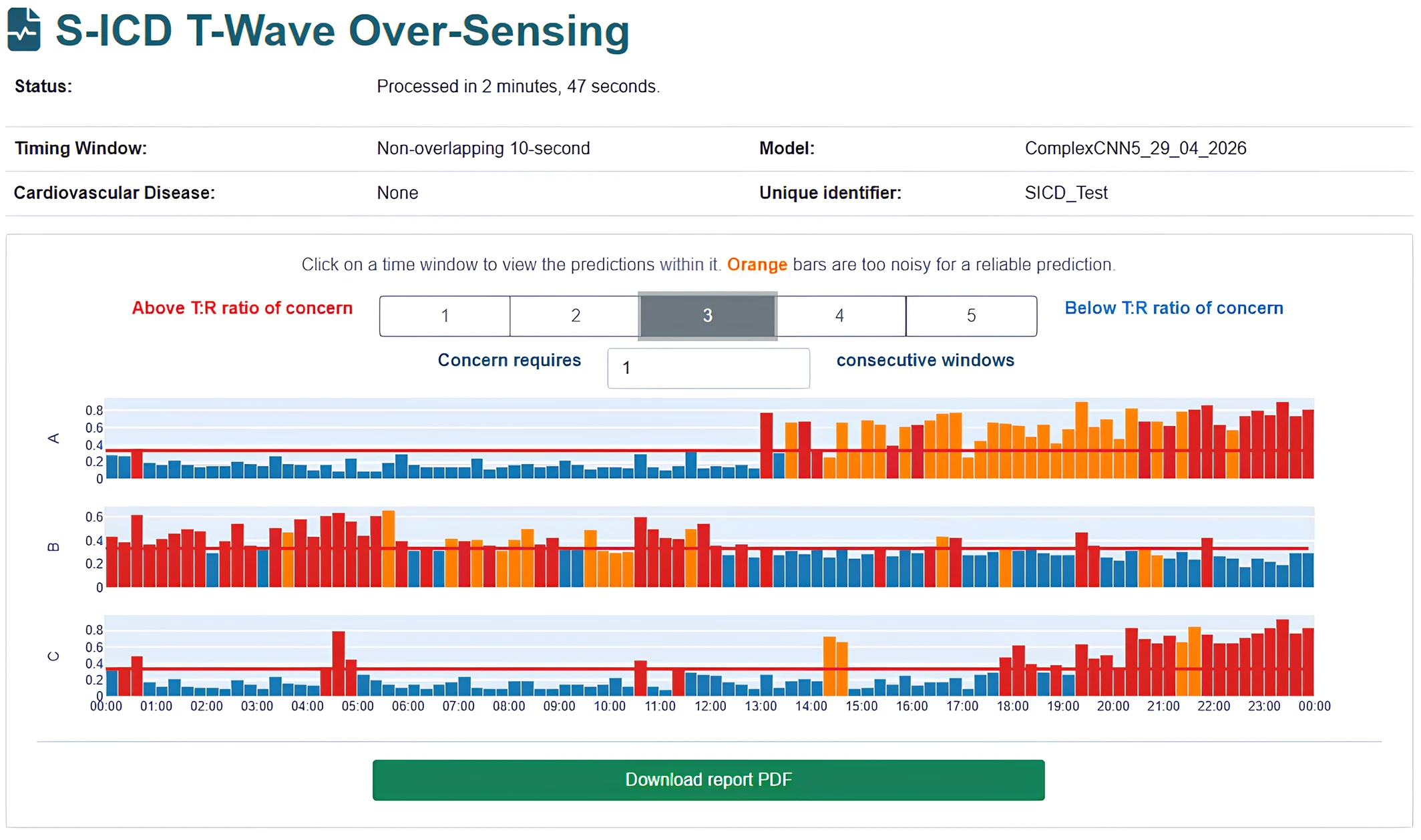
01 · Overview
After submitting a recording for analysis, the clinician sees an overview of the whole day across each recorded vector.
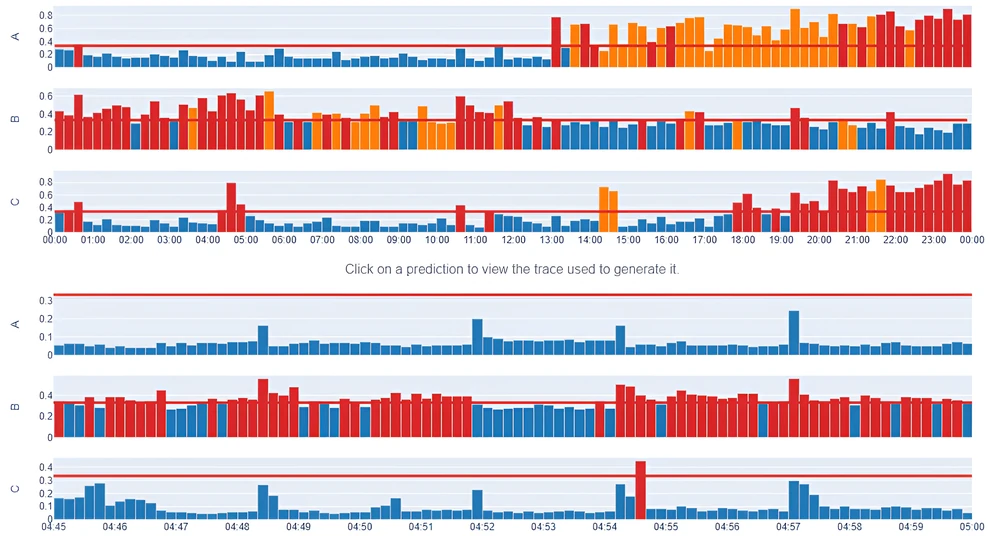
02 · Zoom in
Choosing a time on the overview opens a second timeline, showing that period in more detail.
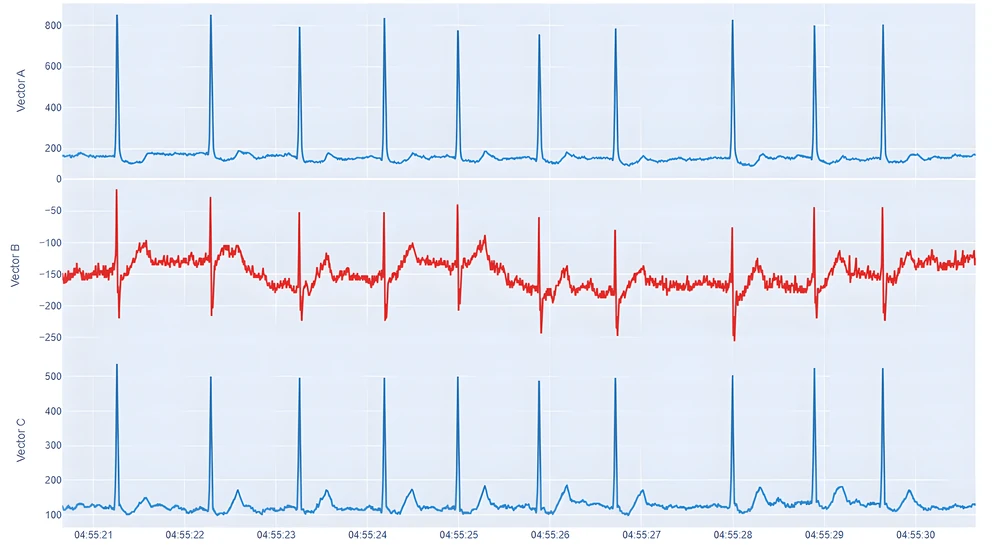
03 · ECG sample
Selecting a specific example on the second timeline shows the 10-second ECG sample it came from.
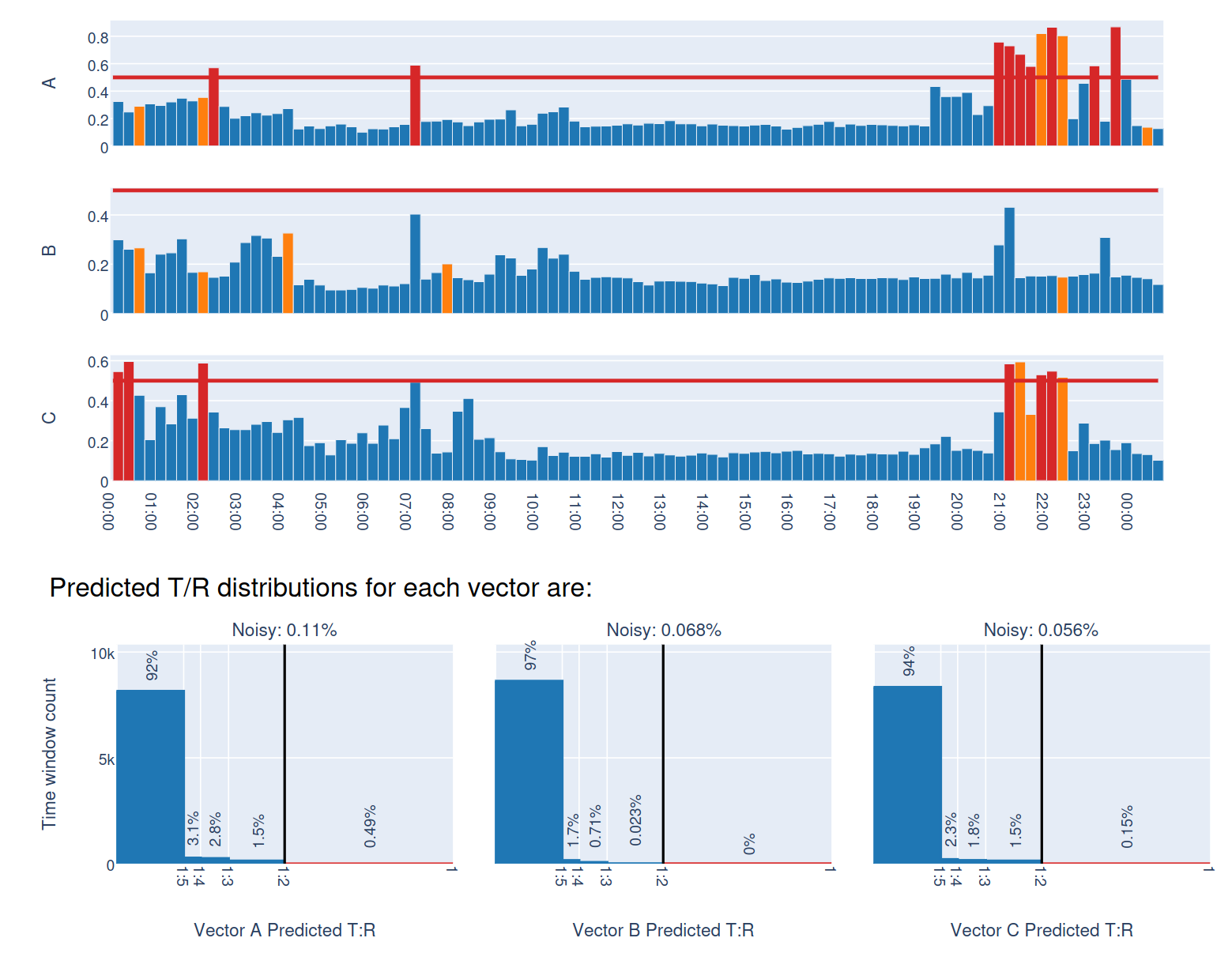
04 · Report
Clinicians can generate a PDF report, including how the predicted T:R or P:R ratios are distributed for each vector.
Step 1 of 4: The 24-hour timeline
Example output from a test recording. Deep-ICD is research software, not a tested medical device, and is not for diagnostic use.
The screening approach
01 · Record
A Holter recording captures how the patient's heart signals vary across the day.
02 · Explore
Deep-ICD analyses the recording and presents patterns for closer review.
03 · Inform
Clinicians interpret the findings, using them to inform the shared decision-making process with the patient.
If you are a clinician interested in testing the platform or contributing to the research, we'd love to hear from you.
Research and publications
Explore the methods, clinical studies, and ongoing work behind prolonged ICD screening.
2024 · Clinical study · Indian Pacing and Electrophysiology Journal
ElRefai M, Abouelasaad M, Conibear I, et al.
2023 · Methods · Annals of Operations Research
Dunn AJ, Coniglio S, ElRefai M, et al.
2023 · Clinical study · Annals of Noninvasive Electrocardiology
ElRefai M, Abouelasaad M, Wiles BM, et al.
2023 · Clinical study · Annals of Noninvasive Electrocardiology
ElRefai M, Abouelasaad M, Wiles BM, et al.
The people behind the project
Deep-ICD brings together cardiologists, mathematicians, AI experts, and software engineers at the University of Southampton and University Hospital Southampton.
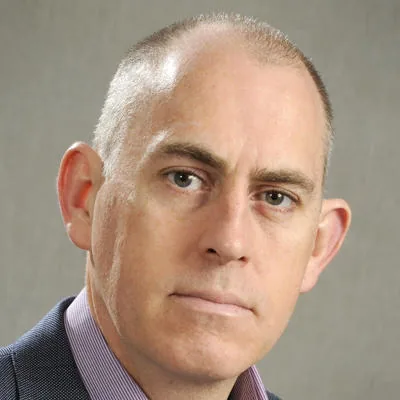
Prof Alain Zemkoho (opens in a new tab)
Principal Investigator
University of Southampton
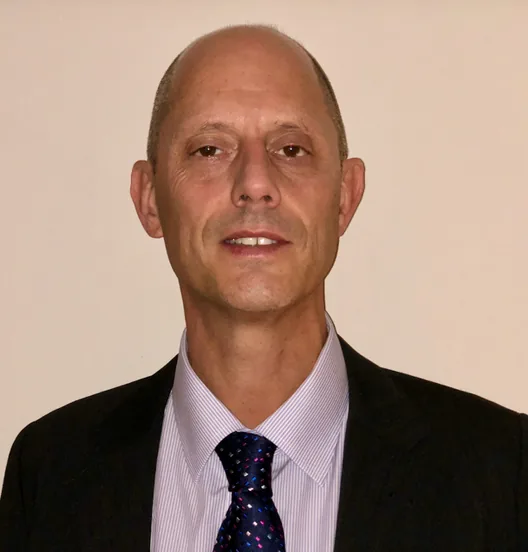
Prof John Paisey (opens in a new tab)
Clinical Lead
University Hospital Southampton
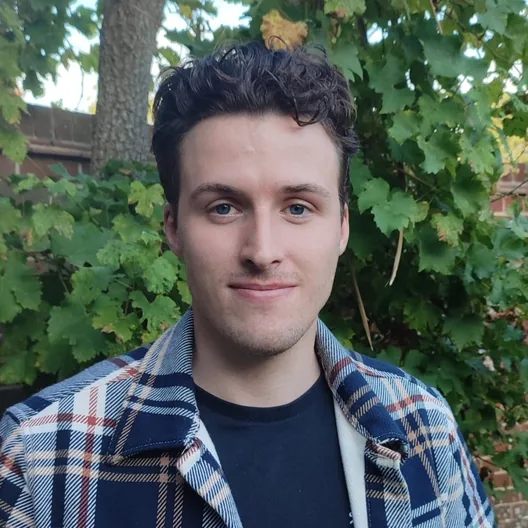
Prof Paul Roberts (opens in a new tab)
Clinical Co-Lead
University Hospital Southampton
Dr Anthony Dunn (opens in a new tab)
Research Collaborator
University of Southampton

Dr Mohamed ElRefai (opens in a new tab)
Clinical Research Collaborator
University Hospital Southampton

Samuel Ward (opens in a new tab)
Doctoral Researcher
University of Southampton

Dr Lin-Thiri Toon (opens in a new tab)
Clinical Researcher
University Hospital Southampton

Bartosz Morawski (opens in a new tab)
Doctoral Researcher
University of Southampton

Dr Alex Touze
Clinical Researcher
University Hospital Southampton

Dr Sam Mangham (opens in a new tab)
Research Software Engineer
University of Southampton
Work with us
Are you a clinician interested in exploring Deep-ICD with your patients or contributing to the research? Register your interest to learn more and request access to the platform.